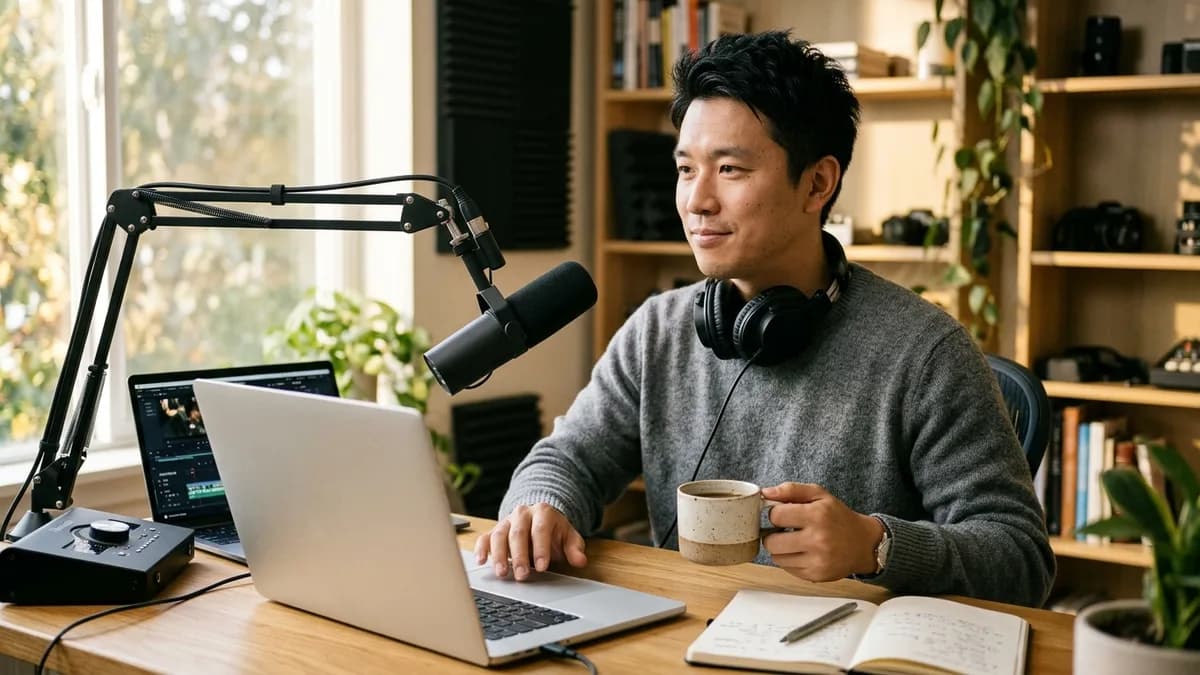
The best AI voice cloning tools in 2026 balance natural vocal fidelity, monthly character allowances, and simple timeline integration. For creators producing weekly videos and long narrations, Loup Studio provides custom voice cloning starting with 10,000 monthly credits on Soundcheck, while ElevenLabs offers expressive audio presets with paid character-based pricing.
Key Takeaways
- ElevenLabs offers expressive dramatic inflection but becomes costly for multi-hour video narration.
- Descript integrates voice generation directly into an audiovisual timeline, ideal for podcast editors.
- Murf AI focuses on corporate slide presentations with pre-made voice catalogs.
- Loup Studio provides 1,000,000 characters for $7/mo on Storyteller, designed for long-form creators needing high volume.
- Dedicated batch synthesis platforms deliver up to thirty times more audio runtime per dollar than token-restricted alternatives.
Transparent Editorial Disclosure
We develop Loup Studio. While we designed our software specifically to address character overage costs on long videos, this comparison provides an objective assessment of competitor strengths, weaknesses, and verified public pricing as of November 2026.
Core criteria for choosing the best AI voice cloning tool
Evaluating speech synthesis software goes far beyond listening to a brief 5-second marketing demo. When selecting an engine for weekly video production or audiobooks, assess these four benchmarks:
- Vocal Naturalness: Does the model capture your natural tone and cadence, or does it flatten your voice into a generic presenter?
- Character Economics: A 45-minute video requires roughly 48,000 characters. Platforms offering low monthly allowances quickly force you into costly tiers.
- Turnaround Speed: Generating a quick revision should take less than 10 seconds in your browser.
- Commercial Licensing: Verify whether generated audio includes clear commercial rights for monetization.
1. ElevenLabs: expressive voice generation with character premiums
ElevenLabs is widely recognized for its expressive voice generation and nuanced emotional inflection. For audio drama producers and short narrative clips, its voice cloning delivers exceptional prosody.
For complete foundation details and architectural walkthroughs, explore our comprehensive AI voice cloning guide.
ElevenLabs is best suited for short-form clips under 10 minutes where community voice selection matters more than high monthly character limits.
According to verified public pricing on the official ElevenLabs pricing page (as of November 2026), the Starter plan begins at $6/mo for 30,000 credits. The Creator plan costs $22/mo for 121,000 credits. For creators producing weekly YouTube documentaries, character limits require strict budgeting.
2. Descript: timeline-native audio editing with Overdub voice replacement
Descript approaches voice synthesis from an editing workflow perspective. Rather than operating purely as a text-to-speech studio, Descript couples voice cloning with an audiovisual timeline editor.
Descript is best for video editors prioritizing timeline text transcript editing over dedicated voiceover character capacity.
According to verified public pricing on the Descript pricing page (as of November 2026), the Creator tier begins at $24/month per editor for timeline audio and video editing. While Overdub allows quick timeline word replacements directly in the text transcript, its raw vocal resonance lacks the deep harmonic richness and formant stability of dedicated neural voice cloning engines.
3. Murf AI: presentation voiceovers for corporate slide decks
Murf AI is tailored specifically for corporate marketing teams, HR onboarding videos, and slide deck presentations. Its interface syncs spoken audio blocks with uploaded PowerPoint slides.
Murf AI is tailored for enterprise corporate training slide decks and internal e-learning presentations with pre-made voices.
Check current tier details on the official Murf pricing page (as of November 2026). Because custom voice cloning is restricted to enterprise plans, solo creators cannot easily clone their personal voice on standard consumer tiers.
4. Loup Studio: character volume and predictable costs for creators
Loup Studio focuses on cloning your own voice and prices usage by character, which suits long scripts.
Designed for video essayists, audiobook authors, and course creators needing high monthly character capacity without overage fees.
Advantages
- Massive character volume: 1,000,000 credits for $7/mo on Storyteller (~15.4 hours of audio).
- Includes 25 voice clone slots on Storyteller, allowing multiple project personas.
- Full commercial rights and clean MP3 or WAV audio downloads on all tiers.
- Free Soundcheck plan includes 10,000 monthly credits and 3 voice clone slots.
Limitations to Consider
- Focuses on offline batch synthesis rather than low-latency real-time voice bot streaming.
- Focused strictly on English vocal cloning rather than multilingual foreign translation dubbing.
- Requires natural punctuation directing to shape conversational breathing breaks.
Loup Studio measures usage simply: 1 character equals 1 credit. At our verified rate of 1,083 characters per audio minute (~65,000 characters per hour), creators can produce two full-length video essays each week and never worry about overage fees.
5. Decision guide: choosing the right tool for your workflow
Selecting the best AI voice cloning software comes down to your primary production format and monthly publishing schedule. Each platform caters to distinct operational priorities:
Platform Selection Strategy
For short promo clips, choose ElevenLabs for expressive inflection. For timeline transcript editing, use Descript. For slide decks, pick Murf AI. For regular long-form YouTube essays and audiobooks, Loup Studio delivers unmatched character volume per dollar.
Generating a single 45-minute video essay consumes roughly 48,000 characters. Tools with low monthly limits force you into expensive plan upgrades. Loup Studio provides 1,000,000 monthly credits on Storyteller ($7/mo), delivering approximately 15.4 hours of finished audio—giving you generous runway for regular uploads and retakes.
Market landscape changes also influence tool sustainability. As developer-focused voice platforms shift priorities or wind down services following corporate acquisitions, video creators and digital publishers investing time into custom vocal profiles should prioritize platforms with stable self-serve tiers and permanent commercial licensing.
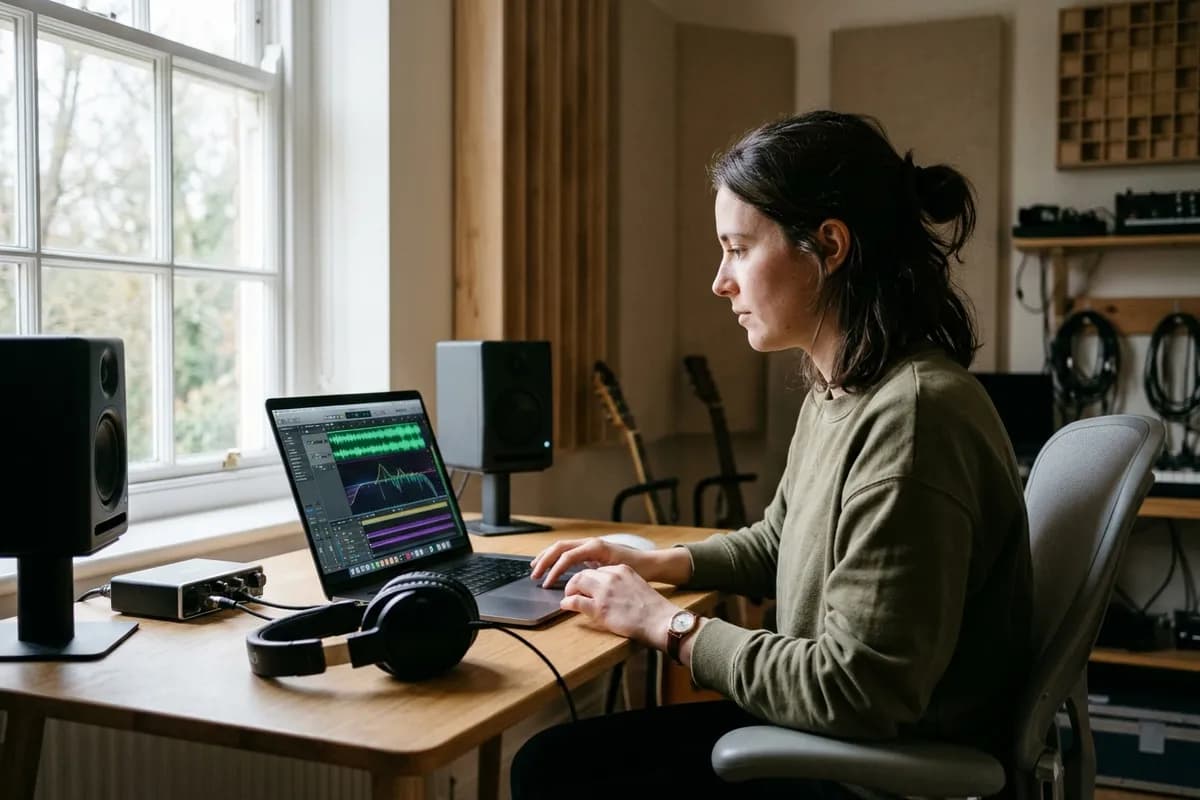
Acoustic intake calibration: room treatment versus microphone hardware
A common myth among video creators is that buying an expensive studio condenser microphone ensures an exceptional clone. In practice, the acoustic profile of your recording space matters far more than microphone hardware. Sensitive condenser capsules in an untreated room pick up flutter echoes bouncing off plaster walls, glass windows, and computer monitors.
Reference Recording Environment Fixes
- Mistake: Recording reference takes in an untreated tiled room or kitchen with bare walls.
Fix: Record inside a clothes closet or facing heavy blankets to eliminate high-frequency room reflections. - Mistake: Positioning the microphone too far away, capturing room reverberation instead of direct vocal energy.
Fix: Place the microphone 15 to 20 cm from your mouth, angled 30 degrees off-axis to avoid breath pops.
Recording your 20-second sample in a quiet room with soft furnishings eliminates flutter echo and delivers a direct signal that voice algorithms map accurately. Speak in your natural conversational tone rather than an artificial announcer voice so your cloned profile sounds natural.
Comprehensive feature and pricing comparison table
Review how the leading voice cloning platforms compare across monthly allowances, pricing, voice slots, and commercial terms:
| Platform | Entry Plan Price | Monthly Allowance | Audio Equivalent | Clone Slots | Commercial Rights |
|---|---|---|---|---|---|
| Loup Studio | $7/mo ($67/yr) | 1,000,000 credits | ~15.4 hours | 25 slots | Included on all tiers |
| ElevenLabs | $6/mo (Starter) | 30,000 credits | ~28 minutes | 3 custom slots | Included on paid plans |
| Descript | $24/mo (Creator) | 10 export hrs | 10 hours | 1 Overdub voice | Included on paid plans |
| Murf AI | Custom / Enterprise | Presentation pool | Varies by plan | Enterprise only | Included on paid plans |
Audio estimates use our ~1,083 characters per minute average; actual credit use on other platforms can vary by model.
Auditioning fidelity: live reference audio versus cloned synthesis
A great voice model should capture your fundamental frequency, vocal fry, and conversational weight. Listen to this direct comparison between a studio condenser microphone take and the Loup Studio synthetic output:
Audio Audition Comparison
Timeline integration: importing synthetic stems into NLE software
Exporting synthesized audio is only the first step in digital video production. Integrating neural stems into your editing timeline requires proper track organization in Premiere Pro, DaVinci Resolve, or Final Cut Pro:
- Export Audio as Clean MP3 or WAV: Download your synthesized take from Loup Studio. WAV stems are ideal for timeline editing, while MP3 files offer lightweight file sizes.
- Align Audio Stems with Visual Cut Points: Drop the audio file onto your primary dialogue track. Align sentence starts with B-roll transitions and on-screen graphics.
- Apply Dialogue Equalization and De-Essing: Add a high-pass filter at 80 Hz to clear low-frequency rumble. If needed, apply gentle dynamic EQ around 3 kHz for vocal clarity.
- Layer a Continuous Ambient Tone Bed: Place a subtle track of recorded room tone or background music underneath your dialogue to smooth transitions between visual scenes.
Exporting your voiceover as a clean WAV or MP3 stem allows you to drag takes directly into your video timeline. Because Loup Studio generates dry, balanced voice stems with consistent volume, you can slice clips against B-roll footage and titles without spending hours re-balancing erratic audio levels.
Calculating audio runtime: how text converts to audio minutes
Budgeting your monthly voiceover production requires understanding character-to-audio math. Loup Studio calculates audio by text characters: 1 character equals 1 credit. At our baseline rate of 1,083 characters per minute (~65,000 characters per hour), budgeting is predictable:
On the $7/mo Storyteller plan, an independent creator producing three 15-minute YouTube videos each month consumes roughly 48,735 credits. That leaves over 950,000 credits for retakes, promotional hooks, and podcast intros.
Common pitfalls when choosing a voice cloning provider
Avoid these common mistakes when evaluating speech synthesis software for active video production:
Voice Cloning Selection Checklist
Verify each condition before subscribing to a voice cloning platform.
- Monthly character allowance covers your full video publishing schedule.
- Quick sample intake requires 60 seconds or less of microphone audio.
- Audio export formats include clean MP3 or WAV download options.
- Full commercial monetization rights are granted perpetually.
- Punctuation marks reliably direct speech pacing and breathing breaks.
Before subscribing to any platform, conduct a 50-word synthesis benchmark using technical terminology, proper nouns, and varied sentence structures. Check how naturally the voice engine handles parenthetical clauses and breathing pauses when directed with commas and em-dashes. This quick test reveals whether the voice model maintains natural throat resonance or flattens into a synthetic drone.
Batch export and file management for weekly video uploads
High-output creators build structured project folders before generating audio. Segmenting your script into 3-minute to 5-minute chapter blocks prevents messy timeline revisions. If you revise a single paragraph later, you re-export that individual file rather than rendering a full 45-minute audio track.
This modular file approach cuts post-production editing time in half. Video editors align each chapter stem with corresponding B-roll sequences and export final video masters without audio sync drift.
Selecting the right Loup Studio tier for your production scale
Loup Studio offers tiered plans tailored to your monthly production requirements:
- Soundcheck (Free): 10,000 monthly credits with 3 voice clone slots, ideal for testing voice quality without entering payment details.
- Storyteller ($7/mo or $67/yr): 1,000,000 credits (~15.4 audio hours) with 25 voice slots, suited for weekly YouTube channels and long video narration.
- Director ($29/mo or $278/yr): 5,000,000 credits (~77 audio hours) with 100 slots, built for daily video workflows and agencies.
- Studio Master ($49/mo or $470/yr): 10,000,000 credits (~154 audio hours) with 250 slots for high-output digital audio studios.
Every subscription tier includes commercial licensing and clean MP3 or WAV downloads. Use coupon code NEWLOUP20 on our offer page to save 20% on annual subscriptions. To compare long-form options, review our guide on ElevenLabs alternatives for long video narration and our breakdown of voice cloning price per hour.
Frequently asked questions about voice cloning tools
Frequently Asked Questions
Try Loup Studio AI voice cloning free
Record a short sample of your voice and turn any script into a voiceover. 10,000 free credits every month, no card needed.